

Dieses war unser erster Hafen auf chilenischer Seite und die
erste Gelegenheit zu tendern. Was heißt, dass das Schiff nicht an einem Pier
festmachte, sondern in einiger Entfernung ankerte und die Passagiere in
Beibooten an Land gebracht wurden. Das Ganze war gut organisiert und viel
weniger beängstigend, als es sich einige vorgestellt hatten.
Punta Arenas erfüllt auf der chilenischen Seite in etwa
dieselben Funktionen wie Ushuaia für Argentinien, aber während uns Ushuaia wie
eine Stadt erschien, die sich noch im Aufbau befindet, ein bisschen wie eine
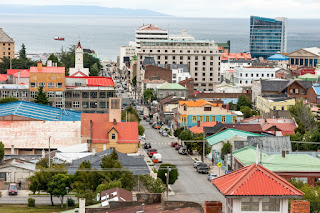
Goldgräberstadt, ist Punta Arenas das fertige Produkt: 120 000 Einwohner,
 traditionelle Architektur im Stadtzentrum, Plätze und Parks, in den Vorstädten Villen
mit interessantem Design, daneben natürlich auch Anzeichen dafür, dass Teile
der Bevölkerung eher ärmlich leben.
traditionelle Architektur im Stadtzentrum, Plätze und Parks, in den Vorstädten Villen
mit interessantem Design, daneben natürlich auch Anzeichen dafür, dass Teile
der Bevölkerung eher ärmlich leben.

Das Ziel unseres Ausflugs war in erster Linie Fort Bulnes,
in der Nähe von Port St. Ana, wo die ersten Chilenischen Siedler 1843
eintrafen. Nachdem sich Südamerika als Ganzes von der Kolonialherrschaft der
Spanier und Portugiesen befreit hatte, gab es einen Wettlauf im Kampf um die letzten
noch „unerklärten“ Teile des Kontinents, an dem sich nicht nur die neu
entstandenen Länder beteiligten, sondern auch die modernen Kolonialvölker wie
Frankreich
 oder Großbritannien, die sich wie Geier auch noch ein Stück der
Beute sichern wollten. Als also die ersten Repräsentanten des neu gegründeten
chilenischen Staates in St. Ana an Land gingen, taten sie das nur zwölf Stunden
bevor ein französisches Schiff anlandete, das dieselben Ansprüche erheben
wollte.
oder Großbritannien, die sich wie Geier auch noch ein Stück der
Beute sichern wollten. Als also die ersten Repräsentanten des neu gegründeten
chilenischen Staates in St. Ana an Land gingen, taten sie das nur zwölf Stunden
bevor ein französisches Schiff anlandete, das dieselben Ansprüche erheben
wollte.

Zunächst hatte das Fort Bulnes nur militärische Aufgaben der
Verteidigung: deshalb wurde es auf der Spitze eines Hügels mit einem weitem
Blick über das umliegende Meer errichtet. Aber zusammen mit dem Militär waren
auch Siedler
 mit ihren Familien angekommen, denn die Insel sollte dauerhaft besiedelt
werden. Die ersten Gebäude waren primitiv errichtet, mit Holz und Lehm- oder
Torfziegeln, darum einen Palisadenzaun und ein paar Kanonen. Die Lehmstrukturen
mussten bald ersetzt werden, da der Lehm den rauen Bedingungen von Wind und
Wetter nicht lange standhielt. Sie wurden durch reine Holzbauten ersetzt. Aber
das Überleben auf dem Hügel war weiterhin sehr mühsam, auch weil es auf dem
Hügel keine geeigneten Anbauflächen und kein frisches Wasser gab. So gaben die
Siedler schließlich auf und suchten
mit ihren Familien angekommen, denn die Insel sollte dauerhaft besiedelt
werden. Die ersten Gebäude waren primitiv errichtet, mit Holz und Lehm- oder
Torfziegeln, darum einen Palisadenzaun und ein paar Kanonen. Die Lehmstrukturen
mussten bald ersetzt werden, da der Lehm den rauen Bedingungen von Wind und
Wetter nicht lange standhielt. Sie wurden durch reine Holzbauten ersetzt. Aber
das Überleben auf dem Hügel war weiterhin sehr mühsam, auch weil es auf dem
Hügel keine geeigneten Anbauflächen und kein frisches Wasser gab. So gaben die
Siedler schließlich auf und suchten
 nach einem anderen Platz, an dem es sich
besser leben ließ und so wurde Punta Arenas gegründet.
nach einem anderen Platz, an dem es sich
besser leben ließ und so wurde Punta Arenas gegründet.


Punta Arenas liegt an der Magellan-Straße, einem der
wichtigen Seewege bevor der Konstruktion des Panamakanals für alle, die den Westen
Amerikas erreichen wollten, und hatte eine Blütezeit vor allem in der Zeit des
Goldrausches in Kalifornien.
Die Landschaft rund um Punta Arenas erinnerte uns stark an
Teile von Schottland, und so wie in Schottland war auch hier Schafzucht und
Wolle eine Weile lang ein wichtiger Zweig der lokalen Industrie. Auch heute
noch gibt es Parallelen,
 denn auch hier wird die Aufzucht von Lachsen in
Fischfarmen ein immer wichtigerer Bestandteil der lokalen Wirtschaft.
denn auch hier wird die Aufzucht von Lachsen in
Fischfarmen ein immer wichtigerer Bestandteil der lokalen Wirtschaft.

Am Abend verließen wir Punta Arenas um der Magellan-Straße
weiter nach Westen, zum Pazifik zu folgen. Doch davon morgen mehr.
Vielen Dank an alle, die mir gute Wünsche für meine
Gesundung beschickt haben. Es geht mir viel besser. Nur ein etwas beharrlicher
Husten erinnert daran, dass ich mich einige Tage miserabel gefühlt habe. ----------

This is our
first stop in Chile and the first occasion to tender. Which means that the ship
could not dock at a pier but had to set out boats which transported us from
ship to shore and back. The process was well organised and much less
frightening than some people feared.
Punta
Arenas fulfils the same objectives on the Chilean side as Ushuaia does for
Argentina, but while Ushuaia to us seemed like a town still under construction,
a bit like a town in the gold
 rush era, Punta Arenas is the finished product:
120,000 inhabitants, traditional architecture downtown, squares and parks, and
on our way out of town we saw suburbs with detached houses which modern architecture
and design, besides signs of course that part of the population is rather poor.
rush era, Punta Arenas is the finished product:
120,000 inhabitants, traditional architecture downtown, squares and parks, and
on our way out of town we saw suburbs with detached houses which modern architecture
and design, besides signs of course that part of the population is rather poor.

Our main
aim on the excursion we took was to visit Fort Bulnes, near Port St. Ana, where
the first Chilean settlers arrived in 1843.
 After South America gained independence
from Spanish and Portuguese colonial power, there was a run for the last “undiscovered”
bits of the continent in which not only the newly formed states took part but modern
colonial powers like France or Britain, like vultures, tried to get hold of a
bit of land. So when the first representatives of the newly formed Chilean
nation arrived in St. Ana, they did this only twelve hours before the first
French ship arrived to claim the same island.
After South America gained independence
from Spanish and Portuguese colonial power, there was a run for the last “undiscovered”
bits of the continent in which not only the newly formed states took part but modern
colonial powers like France or Britain, like vultures, tried to get hold of a
bit of land. So when the first representatives of the newly formed Chilean
nation arrived in St. Ana, they did this only twelve hours before the first
French ship arrived to claim the same island.
 After South America gained independence
from Spanish and Portuguese colonial power, there was a run for the last “undiscovered”
bits of the continent in which not only the newly formed states took part but modern
colonial powers like France or Britain, like vultures, tried to get hold of a
bit of land. So when the first representatives of the newly formed Chilean
nation arrived in St. Ana, they did this only twelve hours before the first
French ship arrived to claim the same island.
After South America gained independence
from Spanish and Portuguese colonial power, there was a run for the last “undiscovered”
bits of the continent in which not only the newly formed states took part but modern
colonial powers like France or Britain, like vultures, tried to get hold of a
bit of land. So when the first representatives of the newly formed Chilean
nation arrived in St. Ana, they did this only twelve hours before the first
French ship arrived to claim the same island.
Punta
Arenas is positioned on the Magellan Strait and before the building of the
Panama Canal it had an important function for all the ships which wanted to
reach the west of the Americas, especially during the time of the Gold Rush in
California.
The
landscape around Punta Arenas reminded us strongly of parts of Scotland. Thus
it was no surprise to hear that sheep and wool was one of the main products of
the area and for a while the town was an important exporter of wool. Even today
they copy the same traits; meanwhile salmon farming has become an important tranche
of local industry.
In the
evening we left Punta Arenas to follow the Straits of Magellan, of which more
tomorrow.
Thank you for your kind wishes for my recovery. I am much better now and only the cough reminds me that I felt rather miserable not so long ago.
Thank you for your kind wishes for my recovery. I am much better now and only the cough reminds me that I felt rather miserable not so long ago.


